



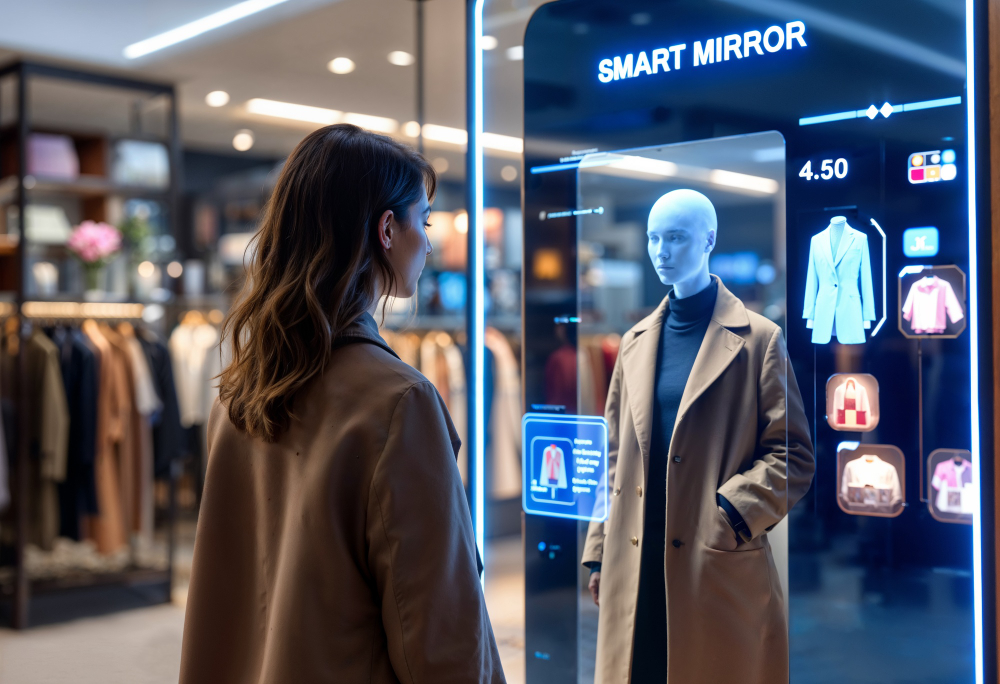
The digital signage industry is progressing at an unexpected rate due to the discoveries of fast-paced technologies in the world. The digital signage trends are changing with the advent of automation and Artificial Intelligence (AI) as companies want to engage in a more innovative customer engagement and enhanced communication experience. With these breakthrough technologies, digital displays are becoming more than message boards to complex, versatile platforms that provide highly effective, customised information.
AI: Revolutionizing Digital Signage
The future of digital signage is artificial intelligence. Digital signage powered with Artificial Intelligence analyzes information in real-time and it also dynamically changes the content according to the demographics of the audience, the behaviour, the geography, and even the weather. With such capability, it is possible to make displays become smart and interactive.
With facial recognition, AI can identify the age and gender of the people who watch it and then re-talk or advertise to that type of population. This degree of customisation has its benefits as businesses engaging in the use of digital signage enjoy the experience of engagement and ROI.
Analytical information on customer interactions is also given by the AI-powered analytics and this means that businesses can ensure that there is effectiveness in the content and that the business is able to fine-tune their marketing strategies. These perceptions help companies become more impactful and data-independent due to having a better idea of what, when, and where.
Automation: Streamlining Operations and Content Management
Automation is also another major digital signage development. To handle a few screens and revise content in different locations was once a tiresome and time-consuming process. Currently, automation systems give the possibility to schedule and control the information on a digital sign centrally.
With automation, the content can be updated automatically depending on the inventory, special events, and time. As an example, a retailing company can adjust its messages on the availability of stocks or offer special deals automatically during prime shopping time without any human participation.
Automation also eliminates a locational variation of message consistency across all screens and minimizes the mistakes of the human factor. This comes in handy with franchising and other big businesses where there may be hundreds or thousands of digital screens used.
Integration with IoT and Other Technologies
The future of digital signage lies in the combination of AI and automation with other emerging technologies like augmented reality (AR), 5G, and IoT. Digital signs can dynamically adjust brightness, volume, or content using IoT-enabled sensors that are able to monitor temperature, foot traffic, and ambient light.
With 5G connectivity, digital signage technologies can be more interactive and engaging, and HD content can be streamed as well as continuously. In the meantime, the AR technology creates new opportunities in marketing and customer-oriented communication as it allows merging the virtual and real world and improving the interaction of the user.
Why Businesses Must Embrace These Digital Signage Trends
Automation and artificial intelligence (AI) in digital signage strategies contribute to keeping businesses on track ahead of others. The technologies enhance the satisfaction of consumers and increase revenues through delivering customized experiences, improving the efficiency of operations, or delivering actionable insights.
Intuitively customizing digital signage to people and the environment will become the rule rather than the exception. The postponement of the introduction exposes companies to the danger of lagging behind other companies that apply these technologies to build strong relationships with their clients.
Conclusion
The latest developments within the sphere of digital signage, including extremely individualised displays and smart automation, are transforming how people are interacting with the environment.